"Rare" gets thrown around casually in Pokemon collecting, but real rarity is a specific set of conditions: print run scarcity, tournament exclusivity, contest prize distribution, error variants, or modern chase-slot pull rates so low they create structural supply constraints. This guide explains what actually makes a Pokemon card rare, and ranks the 20 rarest cards you can either buy on open markets or study as extreme rarity examples.
The picks below span four tiers. Tier 1 covers vintage grails above $20,000 in PSA 10. Tier 2 covers vintage rare cards between $5,000 and $20,000. Tier 3 covers modern chase cards including Special Illustration Rares and alt arts. Tier 4 covers the trophy tier: tournament prizes, contest winners, and one-of-one photo cards that rarely trade at all.
Pricing ranges below reflect recent eBay sold listings and PSA population data as of August 2026 for PSA 10 condition where applicable. Trophy tier estimates come from major auction house public records. Always verify cert numbers on psacard.com/cert before buying high-value graded examples.
What Makes a Pokemon Card Rare?
Rarity in Pokemon collecting is not one thing. It is five overlapping types of scarcity, and understanding them explains why some cards from the same set are worth $50 while others clear $50,000.
1. Print Scarcity. Early Pokemon sets had brief print windows and quality control changes that created genuinely limited variants. Base Set 1st Edition Shadowless copies from 1999 exist in very small quantities because Wizards of the Coast corrected the shadowless border error within weeks of launch. Neo Genesis 1st Edition, Team Rocket 1st Edition, and Legendary Collection reverse holos all fall into this category. Print scarcity is permanent and getting more constrained as raw copies get damaged or graded lower than 10.
2. Trophy and Prize Cards. Tournament winners and contest recipients received exclusive cards with print runs measured in single or low double digits. Pikachu Illustrator (1998 CoroCoro contest, ~39 copies), Tropical Mega Battle No. 1 Trainer (1999, ~12 copies), and Master's Key (2010 World Championships, ~34 copies) are the most famous examples. These rarely trade because holders tend to keep them, and when they do surface, they clear five to seven figures.
3. Error and Variant Cards. Manufacturing errors and short-print variants create additional scarcity within already-limited sets. Base Set no-shadow variants, Neo Genesis error prints, and shadowless-to-unlimited transition copies all trade at multiples over standard copies from the same set. Authentication is critical because error variants attract counterfeiters.
4. Vintage Chase Rarity (Crystal, Gold Star, Shining). Certain vintage sets featured special holo treatments reserved for a small number of end-of-set secret rare cards. Skyridge and Aquapolis Crystal cards (2003) used a distinctive icy foil pattern. EX-era Gold Star cards (2005-2007) were shiny-color variants with ultra-low pull rates. Shining Pokemon from Neo Destiny (2002) used a starry holo pattern. All three sub-categories produced multi-thousand-dollar PSA 10 cards regardless of the base Pokemon.
5. Modern Chase Slots (SIR, Alt Art, Hyper Rare). Sword & Shield onward, Pokemon reintroduced ultra-rare chase slots per set. Special Illustration Rares (SIRs), Alternate Art Rares, and Hyper Rare Gold cards have pull rates around 1 in 200 to 1 in 500 packs, creating modern chase card scarcity distinct from vintage print scarcity. Prismatic Evolutions Umbreon ex, Moonbreon Alt Art, and Charizard Hyper Rare Gold all trace to this era.
The 20 picks below span all five rarity types. Cards can qualify under multiple categories: 1st Ed Shadowless Charizard combines print scarcity with condition scarcity, and Skyridge Crystal Charizard combines print scarcity with vintage chase rarity.
Quick Jump
- 1. Skyridge Crystal Charizard PSA 10
- 2. Aquapolis Crystal Lugia PSA 10
- 3. Base Set Charizard 1st Edition Shadowless PSA 10
- 4. Skyridge Crystal Celebi PSA 10
- 5. Espeon ex Unseen Forces PSA 10
- 6. Skyridge Crystal Ho-Oh PSA 10
- 7. Neo Genesis 1st Edition Lugia PSA 10
- 8. Team Rocket Dark Charizard 1st Edition PSA 10
- 9. Base Set Blastoise 1st Edition Shadowless PSA 10
- 10. Legendary Collection Charizard Reverse Holo PSA 10
- 11. Prismatic Evolutions Umbreon ex SIR PSA 10
- 12. Moonbreon Umbreon VMAX Alt Art PSA 10
- 13. Base Set Venusaur 1st Edition Shadowless PSA 10
- 14. Pikachu Illustrator (1998 Trophy Prize)
- 15. Umbreon Gold Star (Power Keepers)
- 16. Espeon Gold Star (Power Keepers)
- 17. Rayquaza Gold Star (EX Deoxys)
- 18. Master's Key Prize Card (2010 World Championships)
- 19. Tropical Mega Battle No. 1 Trainer (1999)
- 20. Pokemon Snap Photo Cards (1999 Contest Winners)
The 20 Rarest Pokemon Cards of 2026
Tier 1: Vintage Grails ($20,000+ PSA 10)
These are the cards that define the ceiling of open-market Pokemon collecting. All five sit at or above $20,000 in PSA 10 and represent the peak of pre-2010 rarity dynamics: constrained print runs, condition-challenging print eras, and demand curves that have compounded across two decades of collectors aging into higher disposable income.
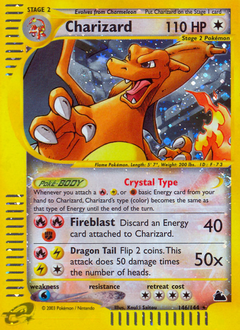
1 Skyridge Crystal Charizard PSA 10
Verified sold price
$70,000-95,000 PSA 10
The undisputed vintage grail of the Skyridge era and one of the most iconic secret rares in Pokemon history. Crystal Charizard from Skyridge (2003) uses a distinctive foil pattern where the crystal-type variant showcases icy holo effects across the entire card face. PSA 10 copies routinely clear the $80,000 mark because the set had a brief print window, the crystal cards were end-of-set secret rares, and Charizard demand keeps supply structurally constrained. This is the card that vintage collectors dream about and modern investors buy when they graduate beyond Base Set.
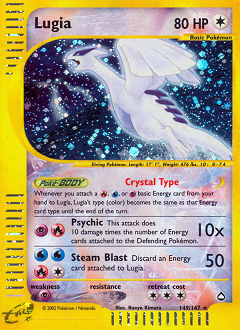
View card details → Browse listings on eBay →2 Aquapolis Crystal Lugia PSA 10
Verified sold price
$70,000-90,000 PSA 10
The equal grail to Crystal Charizard for Lugia enthusiasts and arguably the more beautiful card of the two. Aquapolis Crystal Lugia (2003) uses the same crystal foil treatment as Skyridge Crystal Charizard but predates it by one set. PSA 10 population is genuinely low double digits, and market prices consistently hold above $70,000. The card benefits from Lugia's status as the second most collected legendary after Charizard, and its Aquapolis origin adds e-Reader era premium.
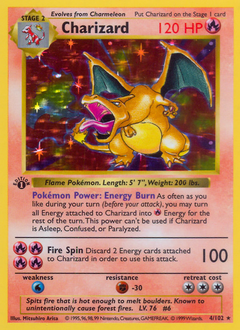
View card details → Browse listings on eBay →3 Base Set Charizard 1st Edition Shadowless PSA 10
Verified sold price
$25,000-35,000 PSA 10 (Unlimited); $300,000+ PSA 10 (1st Ed Shadowless)
The card everyone knows. Base Set Charizard 1st Edition Shadowless in PSA 10 is the most valuable Pokemon card that trades on open marketplaces with any regularity. The shadowless border was corrected quickly during the 1999 print run, making authentic 1st Ed Shadowless copies genuinely scarce. PSA 10 population sits in the very low double digits. Even the Unlimited print run in PSA 10 clears $28,000 because the print era created structural condition challenges: edge whitening, holo scratches, and centering issues combine to make perfect copies legitimately rare across all print variants.
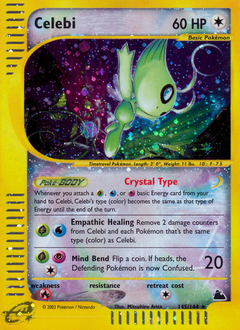
View card details → Browse listings on eBay →4 Skyridge Crystal Celebi PSA 10
Verified sold price
$22,000-28,000 PSA 10
Often overlooked next to Crystal Charizard and Lugia, but Skyridge Crystal Celebi is a legitimate top-tier grail with real market presence. Celebi's inclusion in the crystal set gives it grail status among mythical-Pokemon collectors, and PSA 10 supply is even more constrained than Charizard because Celebi wasn't chased as aggressively during the print era. The card holds a $24,000+ PSA 10 floor and represents one of the strongest value plays in the Crystal category for collectors priced out of Charizard or Lugia.
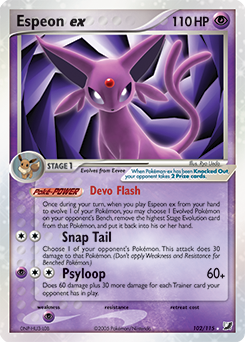
View card details → Browse listings on eBay →5 Espeon ex Unseen Forces PSA 10
Verified sold price
$22,000-27,000 PSA 10
The Espeon ex from Unseen Forces (2005) is the Gold Star-adjacent grail that represents the peak of Espeon's vintage market presence. PSA 10 supply is structurally constrained because ex-era cards had print run limitations and Espeon's art from this era is widely regarded as one of the most beautiful in the entire ex-block. Regularly clears $24,000 in PSA 10, with strong upward momentum tied to the broader Eeveelution collector base that also drives Umbreon prices.
View card details → Browse listings on eBay →Tier 2: Vintage Rare ($5,000–$20,000 PSA 10)
The tier where serious vintage collecting starts becoming accessible. These cards share the print-era condition challenges of the grails above but have larger surviving PSA 10 populations, which keeps prices in the four to low five figure range. Real long-term holds for collectors building serious portfolios.
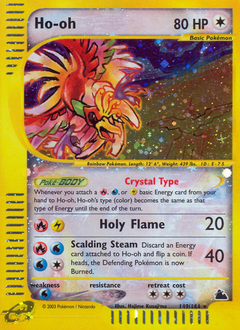
6 Skyridge Crystal Ho-Oh PSA 10
Verified sold price
$20,000-25,000 PSA 10
The third pillar of the Skyridge Crystal set alongside Charizard and Celebi. Crystal Ho-Oh uses the same signature crystal foil treatment and benefits from Ho-Oh's legendary status as Lugia's counterpart. PSA 10 examples consistently clear $22,000, and the card is one of the fastest-appreciating Crystal cards over the last two years as vintage secret rare demand broadened beyond the top-tier grails.
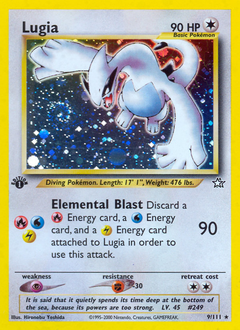
View card details → Browse listings on eBay →7 Neo Genesis 1st Edition Lugia PSA 10
Verified sold price
$18,000-24,000 PSA 10
The vintage Lugia that started it all. Neo Genesis 1st Edition Lugia is Lugia's flagship vintage card and one of the most notoriously difficult vintage holos to grade PSA 10 because of centering and holo scratch issues endemic to the Neo Genesis print run. The 1st Edition symbol scarcity combined with condition challenges creates a genuine bottleneck. PSA 10 copies command $19,000+ and continue to appreciate as Neo-era demand grows among collectors who came of age with Gold and Silver.
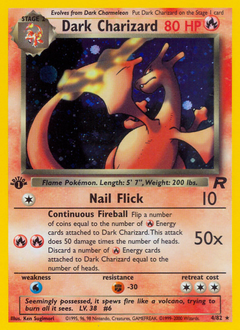
View card details → Browse listings on eBay →8 Team Rocket Dark Charizard 1st Edition PSA 10
Verified sold price
$9,000-13,000 PSA 10
The evil twin of Base Set Charizard and the most iconic card from Team Rocket (2000). Dark Charizard 1st Edition in PSA 10 clears $10,000 consistently because it combines Charizard demand with Team Rocket set nostalgia and a genuinely limited 1st Edition print run. The dark holo art with the vintage Team Rocket border is one of the most recognized alternate-color Pokemon cards in existence, and PSA 10 supply is meaningfully constrained by the same centering and edge issues that plague other Base-era holos.
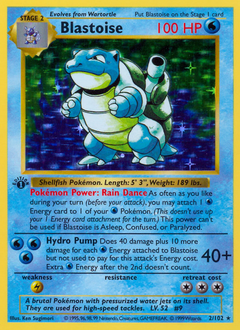
View card details → Browse listings on eBay →9 Base Set Blastoise 1st Edition Shadowless PSA 10
Verified sold price
$7,000-9,000 PSA 10
The forgotten starter grail. Base Set Blastoise in PSA 10 clears $7,700+ and benefits from all the same print era condition challenges as its more famous Charizard sibling. Blastoise never gets the same headline attention as Charizard, which actually makes it one of the better value plays for serious vintage collectors: same era, same rarity dynamics, meaningfully lower entry price. The 1st Edition Shadowless variant in PSA 10 pushes the ceiling considerably higher.
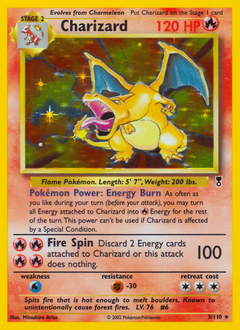
View card details → Browse listings on eBay →10 Legendary Collection Charizard Reverse Holo PSA 10
Verified sold price
$4,500-5,500 PSA 10
The most accessible vintage Charizard grail. Legendary Collection (2002) featured a full-set reverse holo variant that stamped the entire card face with a distinctive rainbow foil pattern. Reverse Holo Charizard PSA 10 clears $4,700+ and represents the vintage Charizard entry point for collectors who cannot justify Base Set prices. Population is much smaller than Base Set copies because Legendary Collection had a shorter print run and reverse holos were pulled less frequently than standard rares.
View card details → Browse listings on eBay →Tier 3: Modern Chase & Notable ($3,000–$10,000 PSA 10)
Modern era rarity looks different from vintage rarity. Print runs are much larger, but chase-slot pull rates are extremely low, and the visual differentiation of Special Illustration Rares and Alternate Arts creates genuine collector demand. These are the modern cards that hold real value despite being from sets still in circulation.
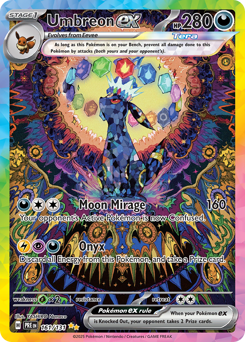
11 Prismatic Evolutions Umbreon ex SIR PSA 10
Verified sold price
$6,500-8,500 PSA 10
The chase card that defined 2025 Pokemon collecting. Umbreon ex Special Illustration Rare from Prismatic Evolutions became the most searched Pokemon card of 2025 within weeks of release. PSA 10 copies clear $6,900 despite the set still being in active circulation because Prismatic Evolutions became one of the most difficult modern sets to open sealed at MSRP. The card's artwork (Umbreon under moonlight against a cosmic backdrop) directly evokes the vintage Moonbreon aesthetic that made this the flagship modern Umbreon.
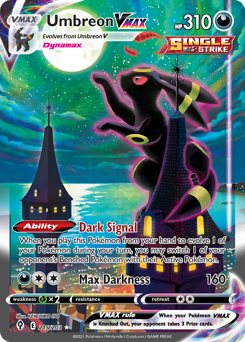
View card details → Browse listings on eBay →12 Moonbreon Umbreon VMAX Alt Art PSA 10
Verified sold price
$4,000-5,000 PSA 10
The modern chase that started the alt art era. Moonbreon (Umbreon VMAX Alternate Art from Evolving Skies) is the most searched Pokemon card of the modern era and the card most responsible for the alt art collecting explosion that defined 2022-2024. PSA 10 copies clear $4,300 and continue to appreciate as Evolving Skies remains out of print and demand for the alt art aesthetic grows. Widely regarded as one of the most beautiful cards Pokemon has ever printed.
View card details → Browse listings on eBay →13 Base Set Venusaur 1st Edition Shadowless PSA 10
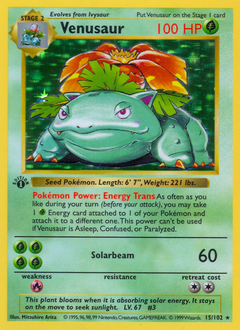
Verified sold price
$3,000-4,500 PSA 10
The third starter grail. Base Set Venusaur consistently sits well below Charizard and Blastoise despite identical print era and condition challenges. PSA 10 clears $3,500 and is the entry-level vintage Base Set holo for collectors starting a starter trilogy. Venusaur represents genuine value at this tier because the same collecting demographic drives all three starters, and rising Charizard/Blastoise prices historically pull Venusaur upward with a lag.
View card details → Browse listings on eBay →Tier 4: Trophy & Educational Grails (Not on Open Market)
The rarest Pokemon cards in existence sit above the tiers below because they were never sold at retail. Tournament trophies, contest prizes, and one-of-one photo contest winners represent print runs measured in single or low double digits. When copies surface, they typically transact through private sale or major auction houses. Including them here for education: understanding these tiers explains what "rare" truly means at the extreme end of Pokemon collecting.
14 Pikachu Illustrator (1998 Trophy Prize)
Market Reality
Not on open market — last sold $5.275M in 2022
The most famous Pokemon card in the world. Pikachu Illustrator was awarded to winners of the 1998 CoroCoro Illustration Contest in Japan, with an estimated print run of 39 copies total. Only 24 are known to still exist. Logan Paul purchased a PSA 10 Illustrator for $5.275 million in 2022, setting the record for the most expensive Pokemon card sale in history. The card features unique artwork by Atsuko Nishida (original Pikachu artist) and displays "ILLUSTRATOR" instead of "TRAINER" on the top banner. Not a card you buy — a card you inherit from someone who did.
Trophy tier — no publicly-listed card database entry. Transactions occur privately or through major auction houses.
15 Umbreon Gold Star (Power Keepers)
Market Reality
$8,000-15,000 PSA 10 (private sales)
The vintage Umbreon grail. Gold Star Umbreon was released in EX Power Keepers (2007) with an ultra-short print run and holo pattern reserved exclusively for the shiny Gold Star variants. PSA 10 population is very low, and prices consistently clear $10,000 when copies appear at auction. The card carries the same collector-base pressure as Moonbreon but from the vintage side, and represents the peak of vintage Umbreon collecting. The Gold Star rarity type produced ultra-scarce alternate-color versions of iconic Pokemon and is one of the most sought-after vintage rarity classifications.
Trophy tier — no publicly-listed card database entry. Transactions occur privately or through major auction houses.
16 Espeon Gold Star (Power Keepers)
Market Reality
$8,000-14,000 PSA 10 (private sales)
The companion to Gold Star Umbreon in Power Keepers (2007) and the shiny Espeon grail. Same rarity dynamics as Gold Star Umbreon: ultra-short print run, dedicated shiny holo pattern, extremely low PSA 10 population. Espeon Gold Star typically trades within 20% of Umbreon Gold Star prices depending on which Eeveelution the collector is targeting. Both are considered peak-of-vintage Eeveelution collectibles and rank among the most sought-after Gold Stars released.
Trophy tier — no publicly-listed card database entry. Transactions occur privately or through major auction houses.
17 Rayquaza Gold Star (EX Deoxys)
Market Reality
$8,000-13,000 PSA 10 (private sales)
The flagship Gold Star for legendary Pokemon collectors. Rayquaza Gold Star was released in EX Deoxys (2005) and features the shiny color variant on the flagship legendary of the Emerald game era. PSA 10 examples clear $10,000+ and pair naturally with vintage Rayquaza collectors who chase the ex Dragon Frontiers Rayquaza Star and other high-end Rayquaza variants. Gold Star rarity + legendary Pokemon + Emerald-era nostalgia creates a demand triangle that continues to hold prices firm.
Trophy tier — no publicly-listed card database entry. Transactions occur privately or through major auction houses.
18 Master's Key Prize Card (2010 World Championships)
Market Reality
Not on open market — estimated $30,000-50,000 (rare private sales)
Awarded to competitors at the 2010 Pokemon World Championships in Hawaii. The Master's Key is one of the rarest tournament trophy cards ever printed, with an estimated 34 copies distributed total. The card features artwork of the Master Ball key from HeartGold and SoulSilver and includes a "No. 34 Trainer" designation on some variants. Trades rarely because holders tend to keep them, and when they do surface at auction they attract dedicated trophy card collectors willing to pay grail-tier prices for authentic World Championship history.
Trophy tier — no publicly-listed card database entry. Transactions occur privately or through major auction houses.
19 Tropical Mega Battle No. 1 Trainer (1999)
Market Reality
Not on open market — estimated $50,000-100,000 (rare private sales)
The rarest of the No. 1 Trainer trophy cards. Distributed to winners of the 1999 Tropical Mega Battle event in Hawaii, with an estimated print run of 12 copies. Alongside the Super Secret Battle No. 1 Trainer and the University Magikarp trophies, these represent the true trophy tier of Pokemon collecting. The Tropical Mega Battle card specifically features original artwork commemorating the Hawaii event and includes trophy-tier authentication markers. When copies surface, they typically transact through private sale or major auction houses like PWCC and Heritage.
Trophy tier — no publicly-listed card database entry. Transactions occur privately or through major auction houses.
20 Pokemon Snap Photo Cards (1999 Contest Winners)
Market Reality
Not on open market — $75,000-125,000 (major sales)
A truly one-of-a-kind rarity type. Nintendo held a photo contest in 1999 for Pokemon Snap (the N64 photography game) where winners received custom Pokemon cards featuring their winning photograph as the card art. Only a handful of these Snap Cards exist for each winning Pokemon, and they carry the winner's photograph as the card image with a distinctive Snap-style border. PSA has graded fewer than 20 total Snap Cards across all Pokemon subjects. When they surface, they attract the same collector tier as Illustrator and Trophy cards because of their genuine one-of-a-kind provenance and Nintendo-authenticated custom art.
Trophy tier — no publicly-listed card database entry. Transactions occur privately or through major auction houses.
How to Buy Rare Pokemon Cards Safely
The rare Pokemon card market attracts sophisticated counterfeiters and resealed slab schemes because the price ceiling justifies the effort. Real buying protocol matters at these tiers. Never send funds before verifying the certification number on the grading company website. PSA cards verify at psacard.com/cert, BGS at beckett.com, CGC at cgccards.com. If a cert number does not resolve or shows different card details, walk away.
For purchases over $1,000, prefer major auction houses (PWCC, Heritage, Goldin) or established dealers with real physical addresses and consignment records. Open marketplace sellers can be legitimate but the risk-reward math tilts toward auction houses at the four to five figure tier. For trophy tier cards (Illustrator, Master Key, Tropical Mega Battle), provenance documentation is essential and typically only auction houses can provide it credibly.
Cross-reference PSA population reports before buying vintage grails. If a card has a PSA 10 population of 20 and the seller claims theirs is one of only "a few in existence," that discrepancy is a warning sign. Population data is public and free to check.
The Rarity vs. Value Distinction
Rare and valuable are related but not identical. Some genuinely rare cards trade cheaply because collector demand is thin. Some heavily-printed cards trade expensively because demand outstrips supply despite population. The 20 picks in this guide skew toward cards where rarity and value both apply, but the trophy tier includes cards priced primarily by scarcity rather than aesthetic demand.
For portfolio-building purposes, understand which driver dominates any given card. Vintage grails (Tier 1) are demand-driven with structural supply constraints. Modern chase cards (Tier 3) are pull-rate-driven with recent supply. Trophy cards (Tier 4) are pure scarcity plays with limited demand pool. Different holding strategies apply to each.
Where to Track Rare Card Pricing
Run any rare Pokemon card you are considering through PokeTracker to see recent sold-listing trends and multi-source PSA 10 pricing. Cross-reference PriceCharting for weekly historical price data. For vintage grails, PSA population reports at psacard.com are essential context. Auction house websites (PWCC, Heritage, Goldin) provide the most credible transaction records for trophy tier cards. The infrastructure exists to make rare Pokemon card buying decisions properly. Use it.
Frequently Asked Questions
What is the rarest Pokemon card in the world?
The Pikachu Illustrator card from the 1998 CoroCoro Illustration Contest is widely considered the rarest Pokemon card in the world, with an estimated 39 copies produced and only 24 known to survive. A PSA 10 example sold to Logan Paul for $5.275 million in 2022, setting the record for the most expensive Pokemon card sale in history. Beyond Illustrator, other trophy cards like the Master Key from 2010 World Championships and the Tropical Mega Battle No. 1 Trainer from 1999 exist in even smaller numbers but trade rarely.
What makes a Pokemon card rare?
Pokemon card rarity comes from five main sources: print scarcity (limited early print runs like 1st Edition Shadowless Base Set), trophy and prize distribution (tournament exclusives with tiny print runs), error and variant cards, vintage chase rarity (Crystal cards, Gold Stars, Shining variants), and modern chase slots (Special Illustration Rares and Alternate Arts with 1-in-200 to 1-in-500 pull rates). Many rare cards qualify under multiple categories simultaneously.
How much is a Gold Star Pokemon card worth?
Gold Star cards from the EX-era (2005-2007) typically clear $8,000 to $15,000 in PSA 10. The most valuable examples include Umbreon Gold Star, Espeon Gold Star (both from Power Keepers), Rayquaza Gold Star (EX Deoxys), and Charizard Gold Star (Dragon Frontiers). Prices depend heavily on the specific Pokemon and PSA population data.
How do I authenticate a rare Pokemon card before buying?
For graded cards, always verify the certification number on the grading company website before paying. PSA cards can be verified at psacard.com/cert. Request clear photos of both the front and back of the entire slab. For raw cards over $1,000, buy through auction houses like PWCC, Heritage, or Goldin. For trophy tier cards, provenance documentation is non-negotiable.
Are Crystal Pokemon cards rarer than 1st Edition Base Set?
By PSA 10 population, Skyridge Crystal Charizard has fewer graded copies than Base Set Unlimited Charizard but more than Base Set 1st Edition Shadowless. Crystal cards from Aquapolis and Skyridge (2003) were end-of-set secret rares with brief print windows. All three sit in the vintage grail category, with Crystal Charizard clearing $80,000+ and 1st Ed Shadowless Charizard clearing $300,000+ in PSA 10.
Can I still buy Pokemon trophy cards like Pikachu Illustrator?
Trophy cards rarely appear on open marketplaces. Pikachu Illustrator, Master Key, and Tropical Mega Battle trophies transact primarily through private sales or major auction houses (PWCC, Heritage, Goldin). Realistic price expectations range from $30,000 for smaller trophies to over $5 million for a PSA 10 Pikachu Illustrator.
Related Reading
- Best Pokémon Cards to Invest In Right Now (2026 Honest Picks)
- 10 Most Undervalued Pokémon Cards to Buy Before They Spike (2026)
- 10 Best Sealed Pokémon Booster Boxes to Invest In (2026)
- 10 Best PSA 10 Pokémon Cards to Invest In (2026)
- 15 Most Expensive Pokémon Cards in 2026
- Pokémon Card Grading Guide: PSA vs BGS vs CGC